Start with your needs, not the battery size
It’s easy to start with the number of kilowatt-hours, available space, or estimated market revenue. By then, the project has already taken a technical step before the business case is finalized.
Instead, start with the site’s load profile, grid contract, operational requirements, and business plans. What are the peak demand levels? When is local production available? Which new loads have been finalized, and which are still just ideas? An energy storage system designed for today’s peaks may become inadequate if production is restructured or a major tenant moves out.
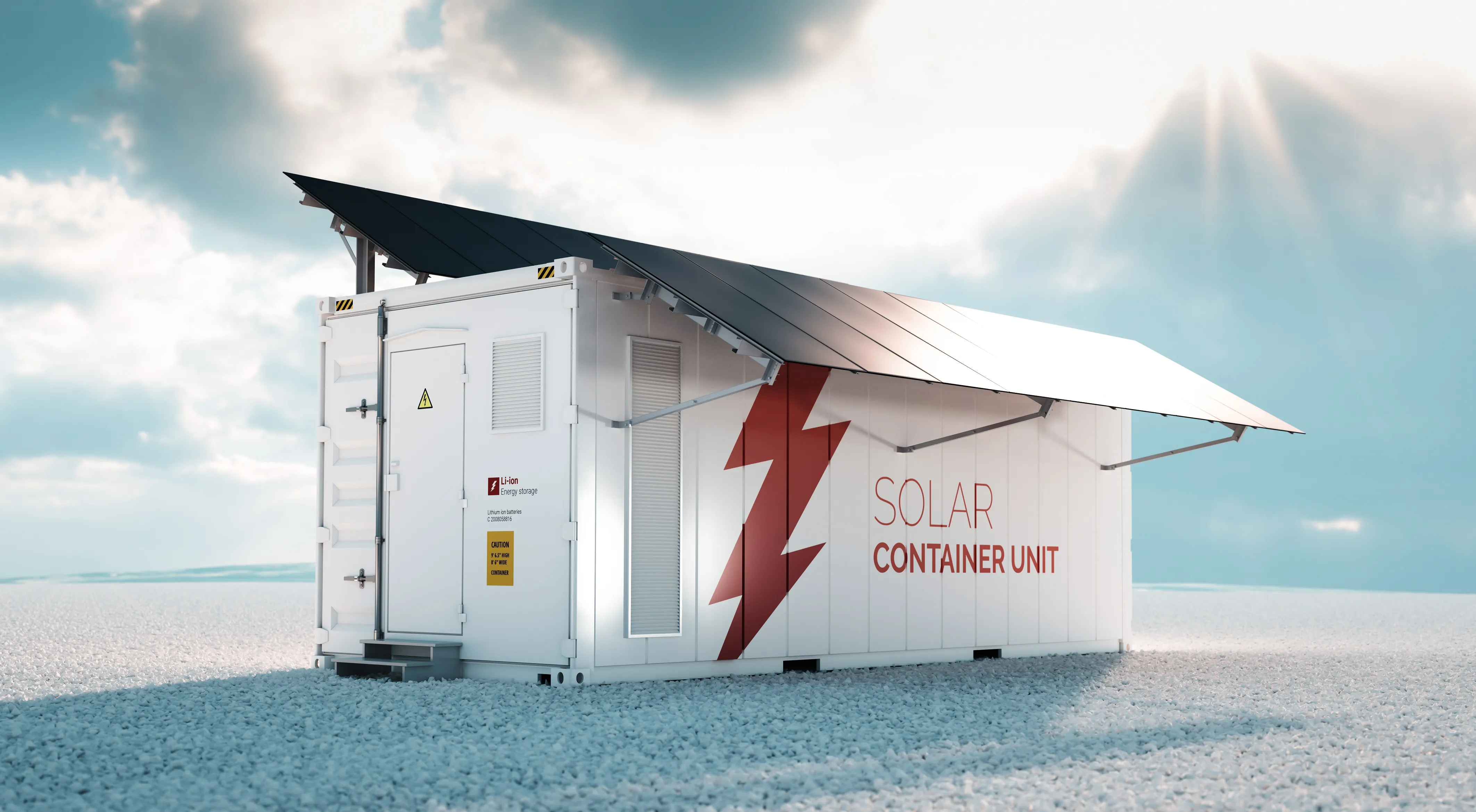
Two quantities must be distinguished. Power, in kilowatts or megawatts, indicates how quickly the battery can charge and deliver energy. Energy capacity, in kilowatt-hours or megawatt-hours, indicates how long it can do so. Short, high peaks place different demands than storing solar power for several hours. On the page about energy storage for commercial properties and industry, SBP describes how analysis, sizing, and implementation can be combined into a turnkey solution.
Five factors that can justify the investment
1. Lower cost for peak power
In many grid contracts, the cost is influenced by the facility’s peak power draw during specific periods. A battery can charge when the load is lower and supply power when the draw approaches a set limit.
It sounds simple, but the shape of the peak makes a big difference. A short peak may require high power but have limited energy capacity. A long peak can drain a battery that looked large enough on paper. Furthermore, the tariff’s measurement period and rules must be linked to historical hourly or quarterly values.
There is also a practical conflict here. If the battery is reserved for a market service, its full capacity may not necessarily be available during peak demand. The same savings cannot be counted twice. SBP’s in-depth analysis on reducing costs through energy storage and ancillary services describes additional opportunities, but the calculation must be based on the tariff at the specific location.
2. Getting More Out of Local Solar Power
When solar power generation exceeds consumption, a battery can store part of the surplus for later use. This can increase self-consumption and reduce the sale of electricity during hours when the business does not need it.
However, using more electricity for personal consumption does not automatically mean greater cost savings. The difference between the value of electricity used for personal consumption and that exported must cover energy losses, wear and tear, and the opportunity cost of the battery’s capacity. If the battery is more useful for handling a power peak, the control system should not fill it with solar power out of habit.
Solar power generation and storage must therefore be calculated both separately and together. For businesses that do not yet have a solar power plant, the solar energy services page for businesses provides an overview of SBP’s comprehensive offering.
3. Flexibility and Support Services
Under certain conditions, batteries can make capacity available to the power system. This is achieved through arrangements that include technical requirements, qualification, availability rules, and agreements with an aggregator or other market participant.
Historical compensation figures are not a forecast. Prices and competition change as more resources are connected, while regulations and technical requirements may be adjusted. A useful calculation therefore presents several scenarios and outlines fees, revenue sharing, degradation, and who bears the market risk.
We encourage you to read SBP’s guide on creating value with batteries through ancillary services. It explains the scope of application but does not replace an analysis of your own connection and operations.
4. Room for Electrification and Growth
New machinery, heat pumps, and charging stations can increase power demand faster than the grid can be expanded to meet it. An energy storage system can sometimes support the load during specific periods and give businesses more flexibility.
However, a battery does not provide unlimited support to the power grid. If the new load remains high for several consecutive hours, the stored energy will be depleted. Furthermore, the battery must be recharged at a time when the grid has sufficient capacity, so that new load peaks do not occur. Therefore, energy storage should be compared with grid measures, load management, and process changes.
If electric vehicle charging is part of the plan, charging patterns and concurrency should be included in the same analysis. Chargeflow and electric vehicle charging for businesses can be coordinated with local production, energy storage, and available power.
5. Operational Reliability and Backup Power
For a business that experiences costly outages, backup power can be extremely valuable, even if it doesn’t appear as recurring revenue. However, a standard energy storage system does not automatically become a backup power source simply because there is a battery on site.
This function requires the correct inverter, protection, control, disconnection, and sizing. Critical loads may also have requirements regarding switching time and power quality. The battery must have a sufficient charge level when the disruption occurs, which may conflict with other uses.
This value should be assessed based on the actual consequences of an outage: loss of production, quality risks, and any requirements from customers or insurers. Designating the entire facility as backup power without a set of technical requirements provides a false sense of security.
A single battery can hold multiple values, but not at the same time
Combining use cases can enhance the return on investment. For example, the battery can handle power peaks during certain hours and be available for flexibility during others. The practical limitation is that the same kilowatts and kilowatt-hours can only be used once at a time.
Three issues need to be clearly reflected in the calculation:
- Is the charge level sufficient when the priority task begins?
- Will the power and energy capacity be sufficient throughout the entire event?
- How do cycling and power usage affect battery degradation, warranty, and future capacity?
A management strategy is needed that prioritizes tasks. It must also be adaptable when tariffs, market conditions, or operations change. Otherwise, a well-crafted calculation risks falling apart due to fairly mundane issues: a peak that lasts longer than expected, a battery that’s already fully charged, or capacity that’s been committed to a contract.
A basis for decision-making must be able to withstand a bad month
The first step is to gather hourly or quarterly data, utility bills, electricity contracts, information on on-site generation, and approved expansion plans. Add information about critical loads, connections, and the grid operator’s known constraints.
Next, establish a primary objective. Other factors may certainly contribute, but the primary objective should guide the design. A time-resolved simulation shows whether charging, discharging, and reserved capacity perform effectively under actual peak loads and tariffs. Annual averages are not sufficient.
The sensitivity analysis is at least as important. Test for market revenue, tariff changes, electricity prices, asset depreciation, interest rates, and changes in load. If the investment is viable only under the most favorable scenario, it does not provide a neutral basis for decision-making.
Finally, the division of responsibilities must be clearly defined. Who is responsible for design, grid-related matters, installation, fire and electrical safety, grid connection, monitoring, and service? SBP offers comprehensive responsibility throughout the entire delivery process, from analysis and business planning to implementation, operation, and optimization.
Ownership or Energy-as-a-Service
Ownership provides control, but ties up capital and requires an organization capable of managing an active technical asset. With Energy-as-a-Service, financing and ongoing responsibilities can be included in the arrangement. The comparison should cover overall economics, contract term, indexation, warranties, revenue sharing, and terms and conditions in the event of changes to the business.
A Power Purchase Agreement is primarily used for the purchase of generated electricity, such as from a solar power plant. It is not a general term for battery financing. SBP’s overview of Greentech services shows how various solutions can be incorporated into a comprehensive energy plan.
Work continues after commissioning. Data quality, alarms, reporting, cybersecurity, and maintenance all affect both availability and costs. Permits, fire safety, grid connection, and technical certification can also impact the schedule more than the installation itself.
For a real estate portfolio, it pays to have common principles for data, management, and monitoring, without treating every location the same. SBP has delivered more than 250 commercial projects in the Greentech sector since 2016. See references from completed projects.
Frequently Asked Questions About Energy Storage for Businesses
What is the greatest business benefit of an energy storage system?
It depends on the location. Lower peak power demands, greater benefits from solar power, flexibility, scope for electrification, and operational reliability are five factors to analyze.
Can the same battery be used for multiple services?
Yes, but the capacity can't be used for everything at the same time. Availability, control, contracts, and wear and tear determine which services can be combined.
Is revenue from support services guaranteed?
No. Prices, competition, regulations, and technical requirements are constantly changing. The cost estimate should present several scenarios and identify who bears the market risk.
Can a battery replace a larger grid connection?
In certain situations, this may delay or reduce the need. If the load remains high for an extended period, a grid upgrade may still be required.
Do all energy storage systems serve as backup power?
No. Emergency power requires a specific system design, protection, control, and reserved capacity for the loads that are to remain in operation.
Take the site's actual conditions into account
Would you like to see what value an energy storage system can generate and which use cases can be combined? Contact SBP for a review of load data, grid agreements, technology, risk, and business models. This information will make it easier to review the system design, without making assumptions about guaranteed revenue.
We look forward to investigating how your property is suitable for green energy.