Do not start using the product
It’s easy to start at the wrong end. A battery looks promising, a large roof area seems suitable for solar panels, or the tenants want more charging stations. But a technical possibility isn’t the same thing as a sound investment decision.
A battery solution can reduce costly power spikes in one building but offer limited benefits in another. Solar energy may be a good fit for a logistics facility with a high daytime load, while an office first needs to get its charging and power consumption under control. In a third building, the remaining lifespan of the roof is reason enough to wait.
The important thing, then, is not that every property receive the same solution. The important thing is that each measure addresses a specific problem and can be tracked financially.
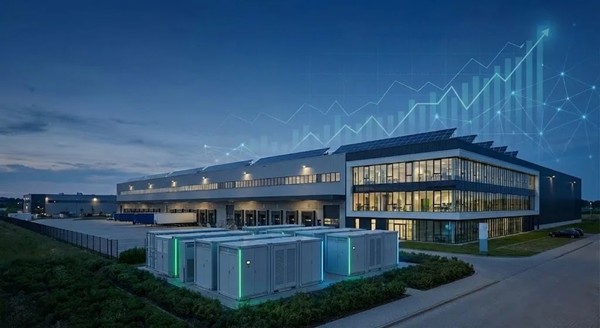
SBP combines solar energy, energy storage, and electric vehicle charging into a single Greentech offering for commercial real estate companies and industrial firms. This makes it possible to evaluate the technologies together, but also to exclude those that are not suitable for the property.
A good baseline shows where the costs arise
Annual consumption is a starting point, not a basis for decision-making. To identify the factors driving costs, you need hourly or quarterly data on energy and power. Factor in grid and electricity supply contracts, operating hours, known operational deviations, technical conditions, and planned new loads.
Energy and power are two different concepts
Energy costs reflect the amount of electricity used over time. Power costs are influenced by how high the power draw is at certain times and by how the local utility has structured its rate plan. Therefore, two properties with the same annual consumption may have different cost profiles.
This difference also determines which measures are reasonable. Solar power can reduce the amount of purchased electricity when production coincides with consumption. A battery or other power control system may be more effective when short, high peaks drive up grid costs. Electric vehicle charging can create new peaks if left uncontrolled, but load balancing makes it possible to distribute the available power.
Compare Properties on a Fair Basis
Total cost does not tell the whole story about a portfolio. Therefore, relate energy and power consumption to an operational metric that is appropriate for the building, such as square meters, operating hours, production, or the number of charged vehicles.
Also take into account vacancy rates, weather, renovations, and changes in the tenant mix. A property that appears inefficient may have experienced a temporary change in use. Another may show a good annual average despite recurring peaks in energy consumption.
The baseline does not have to be a major analytical project. However, the data sources, time periods, and assumptions must be clear. Otherwise, it will be difficult to determine whether an implemented measure actually produced the results described in the calculation.
Prioritize based on net operating income and actual feasibility
Once the current situation has been assessed, the measures can be prioritized. Evaluate the potential cost impact, investment or contract costs, technical obstacles, impact on operations, and how quickly the organization can make a decision.
A simple portfolio matrix can divide the projects into four groups:
- is now implementing
- investigate further
- coordinate with another project
- wait and see
The last group is important. A project doesn’t benefit from being started too early. If the roof is due to be replaced in a few years, the solar installation may need to be coordinated with the roofing work. If a property is soon to be renovated or sold, a long-term contract may limit your flexibility. At the same time, a utility connection may need to be initiated early, even if the investment decision is still some time away.
Set goals that can be measured later
Link the goals to financial and operational metrics. These may include purchased energy, cost per square meter, peak power draw, percentage of locally generated solar power used, the contribution margin of the charging service, availability, or the number of service calls.
Keep forecasts and actual results separate. The projection shows what might happen under certain assumptions. After implementation, the results should be compared with the baseline and explained in terms of weather, prices, utilization, and changes in operations.
Solar energy works best when production matches consumption
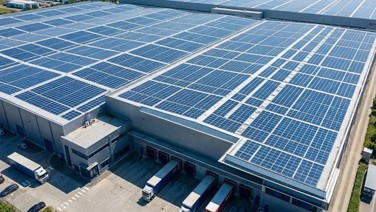
A commercial solar power system generates electricity close to where it will be used. The benefits depend primarily on the proportion of the generated electricity used on the property, the cost of alternative purchased electricity, the system’s actual output, and the terms for selling surplus electricity.
Properties with high daily solar irradiance often have good potential for high self-consumption. But a large roof alone is not enough. Structural capacity, waterproofing, fire protection, grid connection, and future renovations can all affect both the cost and the timeline. SBP’s solar energy services page provides more information on the process from analysis to a fully operational commercial facility.
The right size is more important than the largest possible facility
If installed capacity is maximized without taking the load profile into account, the property may generate a significant surplus during hours of low usage. A smaller system can result in a higher proportion of self-consumption and a more stable financial projection. Proper sizing depends on the business objective, the electricity contract, the floor area, and the ability to use or store the generated power.
For real estate companies looking to avoid a large initial investment, SBP’s primary alternative is Energy-As-A-Service. A Power Purchase Agreement (PPA) remains a relevant model to consider when comparing solar energy options, but SBP does not offer PPAs as a standard arrangement. The pricing structure, term, liabilities, and terms and conditions in the event of changes to the property must always be compared with those of direct ownership.
Energy storage needs a clear purpose
A battery does not create value simply by being in place. It needs to address a specific need, such as reducing peak demand, increasing the use of local solar power, supporting charging, or providing flexibility when the technical and market conditions are right.
Multiple applications can be combined, but they should not be calculated as if the entire battery were always available for all of them. Capacity reserved for one function cannot be fully utilized for another at the same time. Therefore, the calculation must take into account the control strategy, warranty terms, degradation, connection requirements, and operational responsibility.
SBP’s in-depth report on energy storage and ancillary services takes a closer look at the technical and economic aspects of battery use. This page serves a different purpose: to help real estate companies prioritize among various measures in their portfolio.
Actual load data determines the design
Annual energy output doesn't tell you enough about the battery's size. Instead, analyze the level, duration, and frequency of power peaks. Also note when they coincide with solar production, charging, and other loads.
Test several scenarios for rates, prices, and usage. A useful calculation shows which assumptions have the greatest impact on the outcome. This also lets the organization know which metrics need to be monitored and when the decision needs to be reassessed.
Electric vehicle charging is both a burden and a service
For property owners, charging is more than just a technical installation. It needs to work for tenants, visitors, or a vehicle fleet. The business is influenced by demand, pricing, payment flows, support, available power, and how easily the facility can be expanded.
Uncontrolled charging can exacerbate power peaks in a building. Load balancing makes it possible to distribute capacity among vehicles and adjust charging based on other electricity usage. Commercial vehicles may need to be prioritized based on their departure times, while other charging can use the remaining power.
Chargeflow is SBP’s solution for billing private and public charging stations, featuring a mobile app and a cloud-based charging service. The business-oriented guide to electric vehicle charging for property owners helps you evaluate the setup. When it’s time to design the solution, you’ll find more information on the electric vehicle charging service page.
Governance must follow clear business rules
When solar power, energy storage, and charging come together in the same building, priorities must be set. The control system can balance local production, power limits, charging needs, battery status, and the facility’s operational requirements.
But technology alone cannot determine what is most important. The organization must specify which loads may be controlled, which vehicles should be charged by a certain time, how much battery capacity should be reserved, and who is authorized to change the strategy. Without clear rules, even an advanced control system becomes difficult to manage.
Ensure Access to Data
The real estate company must be able to monitor relevant metrics, alerts, costs, and outcomes. The agreements must therefore specify data formats, ownership, access, and storage. It must also be possible to see when a control parameter was changed and by whom.
Open interfaces and a documented division of responsibilities reduce the risk of vendor lock-in. It becomes easier to develop the solution as more properties, charging stations, or energy services are added.
The financing should be aligned with the property's time horizon
Ownership provides control over the asset and its financial performance. At the same time, it ties up capital and requires expertise in procurement and management. Energy-As-A-Service can combine the solution, financing, and ongoing responsibilities into a single service model and reduce the need for a large initial investment.
The comparison needs to go beyond the cost of financing. Consider the term of the agreement, indexation, residual value, liability, service level, data, insurance, and the ability to modify the facility. The terms and conditions for a future property sale are also important. An arrangement that suits a long-term core holding may not be suitable for a property that is soon to be developed or sold.
Overall responsibility reduces the gap between decision-making and operations
Energy projects often involve finance, technology, management, tenants, grid owners, contractors, and sometimes financiers. If responsibilities are divided without a clear main process, gaps can easily arise between cost estimation, design, commissioning, and follow-up.
SBP’s comprehensive responsibility—from analysis to operations and optimization —covers analysis and business planning, implementation, operations, monitoring, and optimization. The real estate company still needs to take ownership of its goals and decisions, but gains a cohesive chain of responsibility throughout the project.
Elevate the follow-up from the technical department to management
Reporting should not be limited to kilowatt-hours generated. Also track costs, power output, availability, deviations, and the impact on net operating income. At the portfolio level, management needs to see which properties are performing as planned, which ones require optimization, and where the next investment would be most appropriate.
A quarterly review can combine technical performance with financial analysis. Any significant deviations must be assigned a person responsible, an explanation, and a corrective action. This will make Greentech an integrated part of the real estate business, rather than a collection of standalone installations.
Five Steps from Assessment to Follow-Up
1. Collect data and agreements
Map out consumption, power, costs, grid conditions, floor space, operational requirements, and planned loads for each property.
2. Establish a comparable baseline
Normalize relevant key performance indicators and document any deviations. This will allow you to compare the properties on a reasonable basis.
3. Rank the measures
Evaluate solar energy, energy storage, charging, and control systems based on their economic impact, risk, feasibility, and strategic relevance.
4. Choose an ownership and business structure
Compare your own investment with Energy-as-a-Service, and use a Power Purchase Agreement as a benchmark for solar power generation, based on your portfolio’s capital strategy and time horizon.
5. Implement, measure, and adjust
Determine responsibilities, key performance indicators, and monitoring intervals before placing an order. Then adjust your management approach and priorities as rates, prices, and usage change.
SBP has delivered more than 250 commercial projects in the Greentech sector since 2016. See the Wåhlin Fastigheter reference and other completed reference projects for examples from commercial real estate settings.
Frequently Asked Questions About Energy Costs and Net Operating Income
Which energy-saving measure should a real estate company start with?
Start with the data and the biggest verified cost driver. The right first step could be control systems, solar power, energy storage, charging, or a combination of these.
How does solar energy affect net operating income?
Locally generated solar power can reduce the need to purchase electricity. The outcome depends on production, self-consumption, investment or contract costs, and the property’s electricity rate.
Can energy storage reduce a building's electricity costs?
Yes, provided the battery is sized and controlled to handle relevant power peaks. The benefits depend on the load profile, the tariff, other applications, and technical conditions.
How should charging be addressed in the energy plan?
Treat charging as both a new load and a service. Plan capacity, load balancing, billing, support, and expansion together.
When is Energy-as-a-Service a good fit?
This model may be appropriate when a real estate company wants to implement measures without a large initial investment. Contracts, liabilities, and total costs should always be compared with those associated with direct ownership.
What does "overall responsibility" mean in an energy project?
This ensures a cohesive chain of responsibility, from analysis and business planning through to implementation, operation, monitoring, and optimization.
CTA: Prioritize the right actions in your portfolio
Would you like to see which properties and energy flows are a reasonable place to start? Contact us at SBP for a detailed review of your portfolio, possible business models, and responsibilities throughout the solution’s lifecycle.
We look forward to investigating how your property is suitable for green energy.